 01
01HOMELAB AND NETWORKING
A gateway service sits between unreliable devices and downstream reliable infrastructure. If the gateway collapses under burst load or network instability, the whole system suffers.
 02
02DEVOPS
Serial debugging is still central in embedded work, and Rust is excellent for building reliable terminal tooling. I structure serial utilities as pipelines: read bytes, frame messages, parse the protocol, then route structured events out.
 03
03DEVOPS
Writing `no_std` Rust firmware requires different habits than server Rust. Memory is constrained, timing is strict, and panic strategy must be deliberate.
 04
04HOMELAB AND NETWORKING
Many firmware bugs are actually invalid state transitions. Rust helps by making state explicit and hard to misuse, modelling each controller state as an enum variant with transitions that consume the old state and return the next one.
05 HOMELAB AND NETWORKING
For small IoT backends, Axum provides enough structure without heavy framework overhead. My baseline service exposes ingestion, latest status, and historical query endpoints.
06 HOMELAB AND NETWORKING
A common mistake in Rust projects is mixing application and library error styles. I use `thiserror` for typed library errors and `anyhow` for top-level binaries. Libraries expose specific variants so callers can branch by cause.
 07
07HOMELAB AND NETWORKING
Cross-compiling Rust is easy to start and hard to standardize across teams. I treat toolchains as part of the project, not local machine state. Target triples, linker config, and environment variables live in versioned project files.
 08
08DEVOPS
Hardware abstraction layers are where embedded code often becomes difficult to test. I design traits around capabilities, then keep business logic independent from concrete drivers.
 09
09RASPBERRY PI
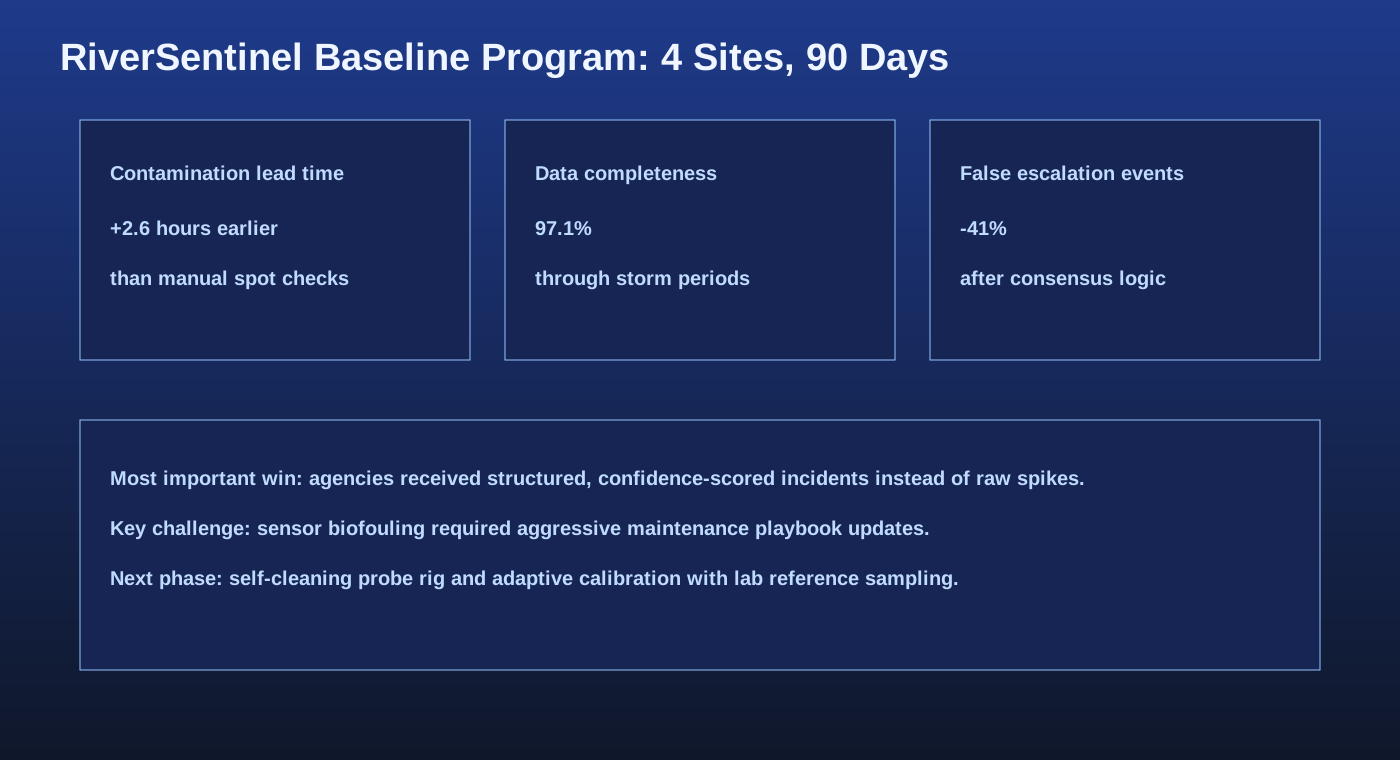
RiverSentinel was designed for environmental monitoring teams that need faster incident detection than manual sampling can provide, but also need evidence quality high enough for response workflows.
 10
10RASPBERRY PI
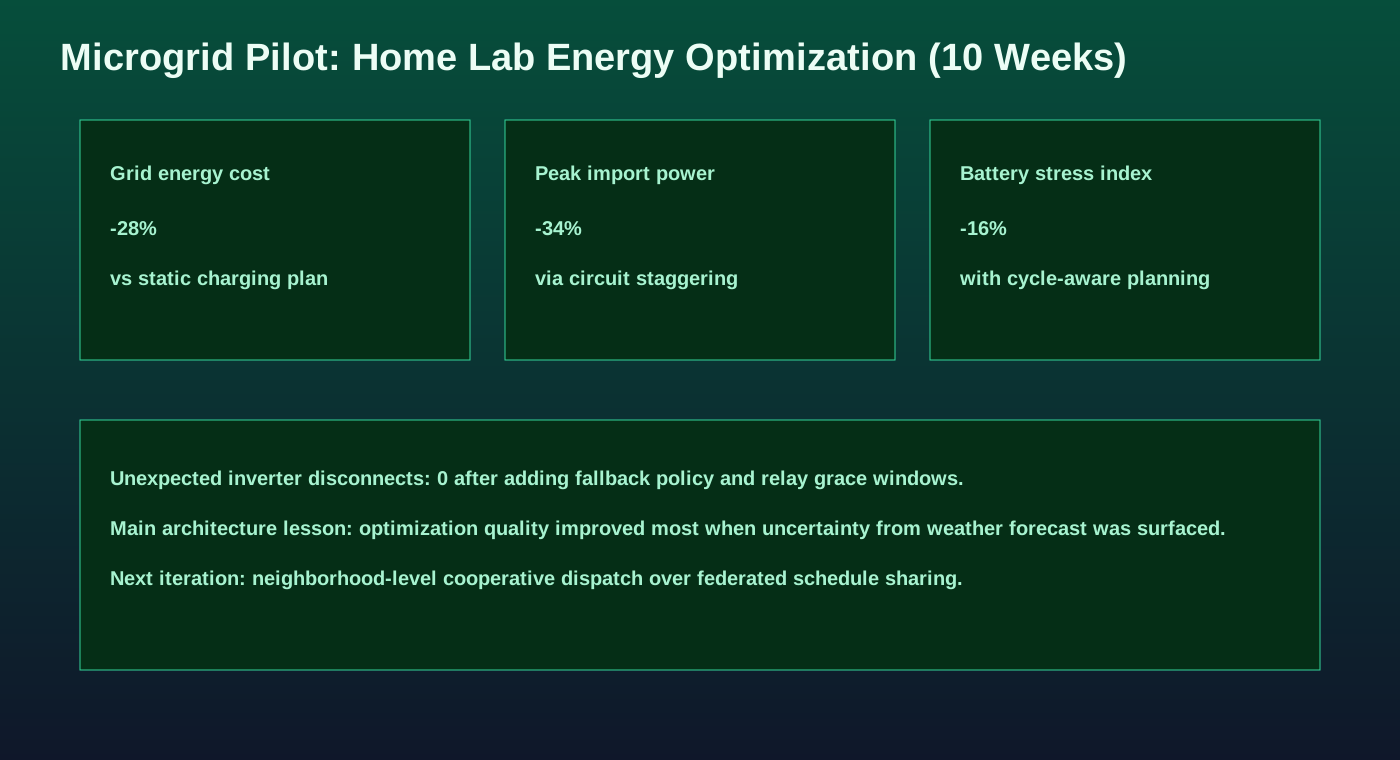
This project started with a practical question: can a small home lab run like a disciplined microgrid instead of a set of independent devices fighting each other?
 11
11DEVOPS
Hardware-connected software fails at boundaries: timing edges, flaky links, and rare protocol states. A strong test strategy must combine fast feedback with realistic integration checks.
 12
12RASPBERRY PI
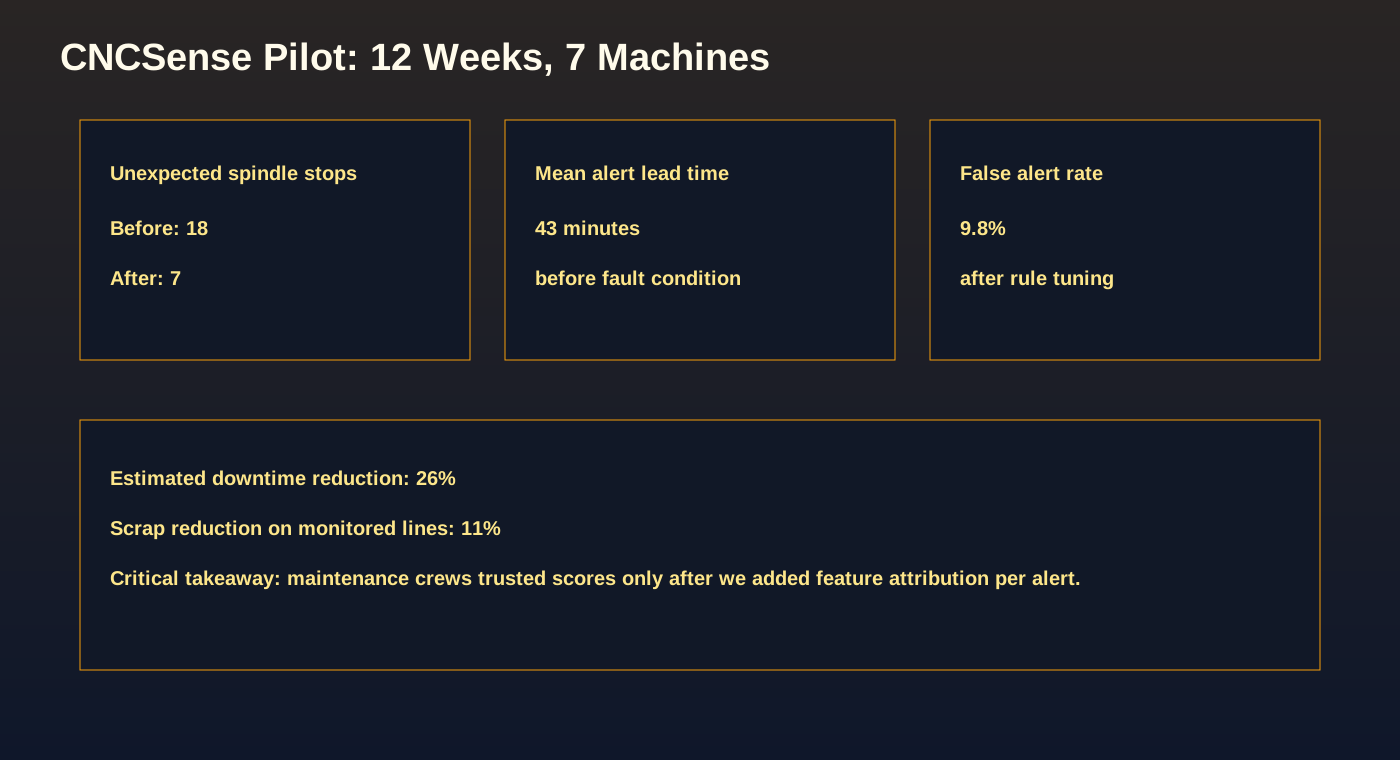
CNCSense was built to solve a common manufacturing pain: legacy machines fail without enough warning, and maintenance teams are forced into reactive firefighting.
 13
13RASPBERRY PI
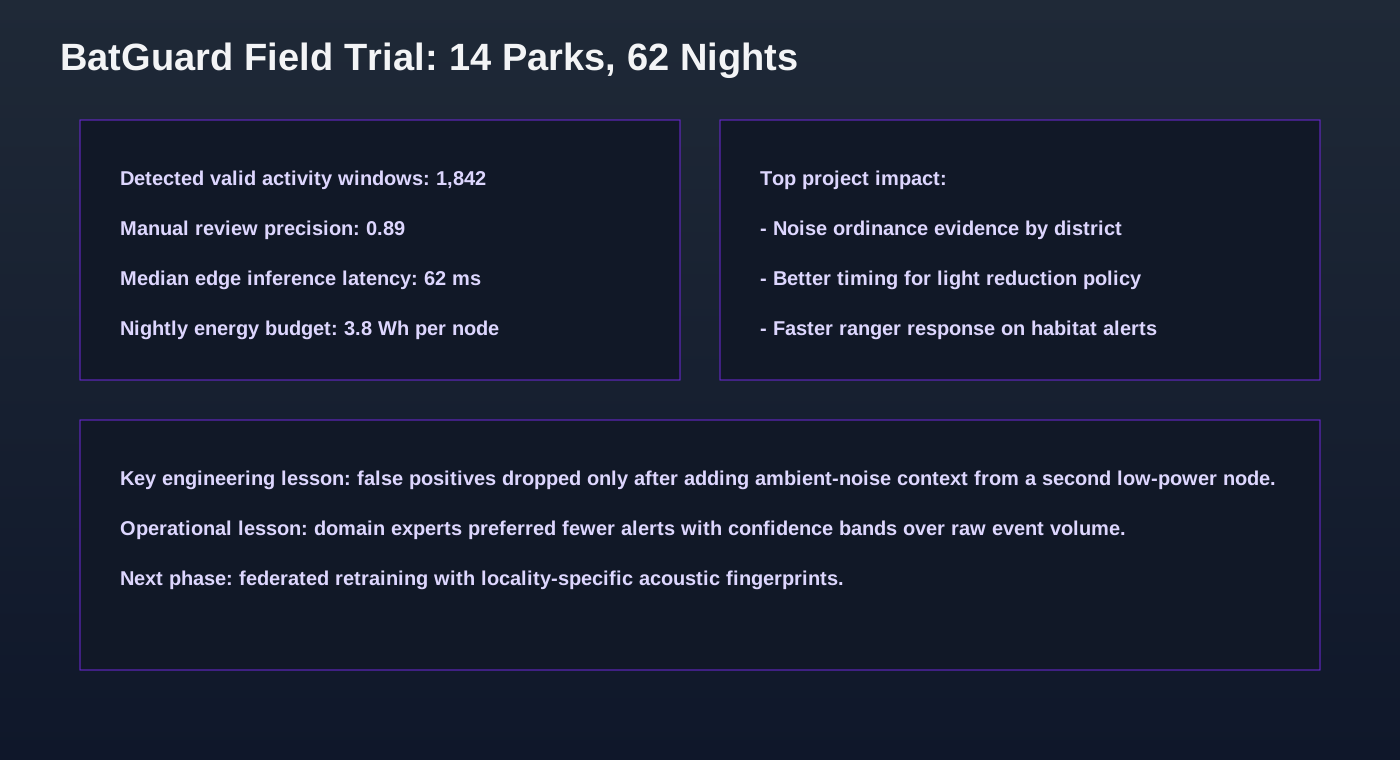
BatGuard is an urban biodiversity platform designed for one hard reality: ecological signals are noisy, and policy action requires credible evidence.
 14
14RASPBERRY PI
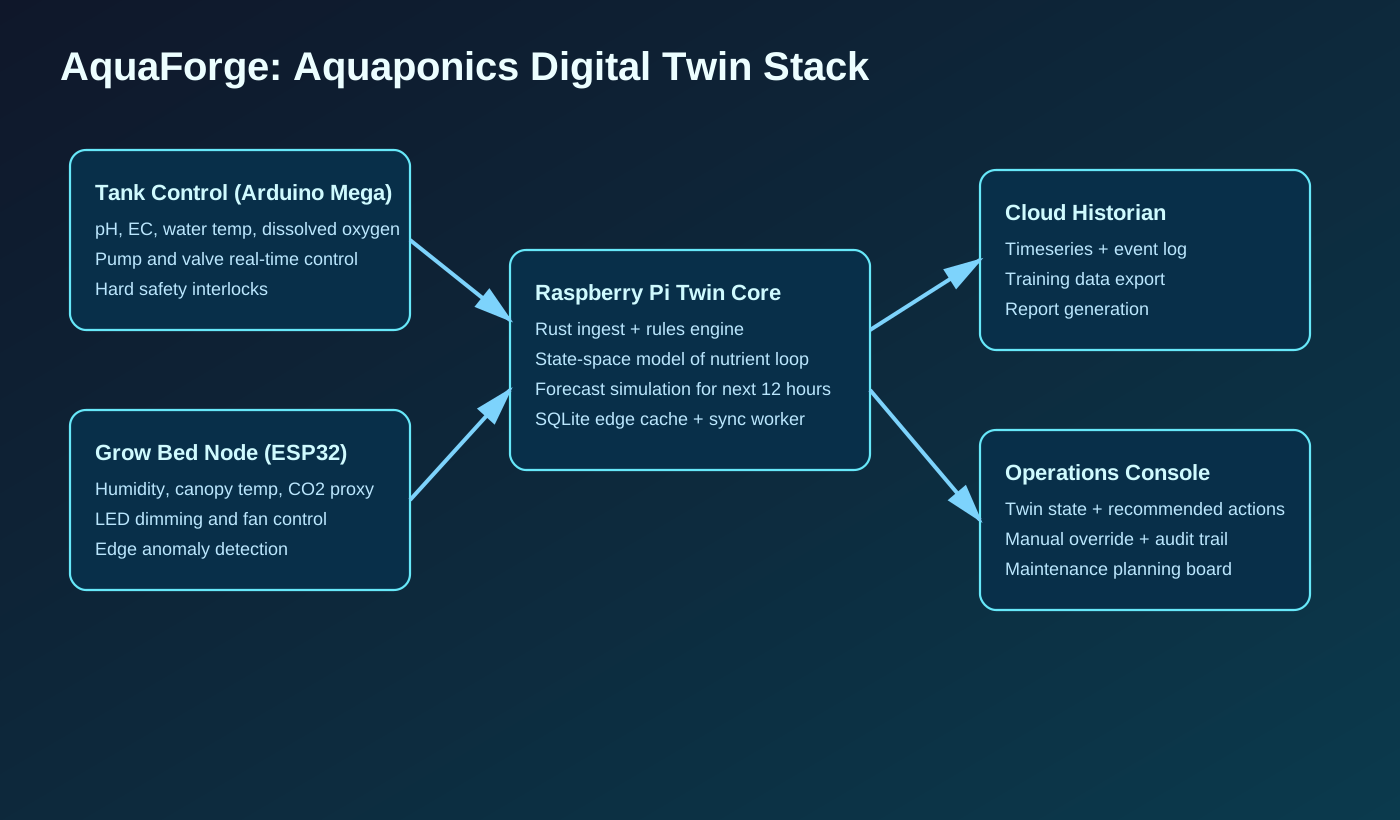
AquaForge started as a home-scale aquaponics controller and evolved into a real digital twin platform. The core idea was to move from reactive control to predictive operation: detect chemistry drift early and simulate intervention outcomes.
 15
15RASPBERRY PI
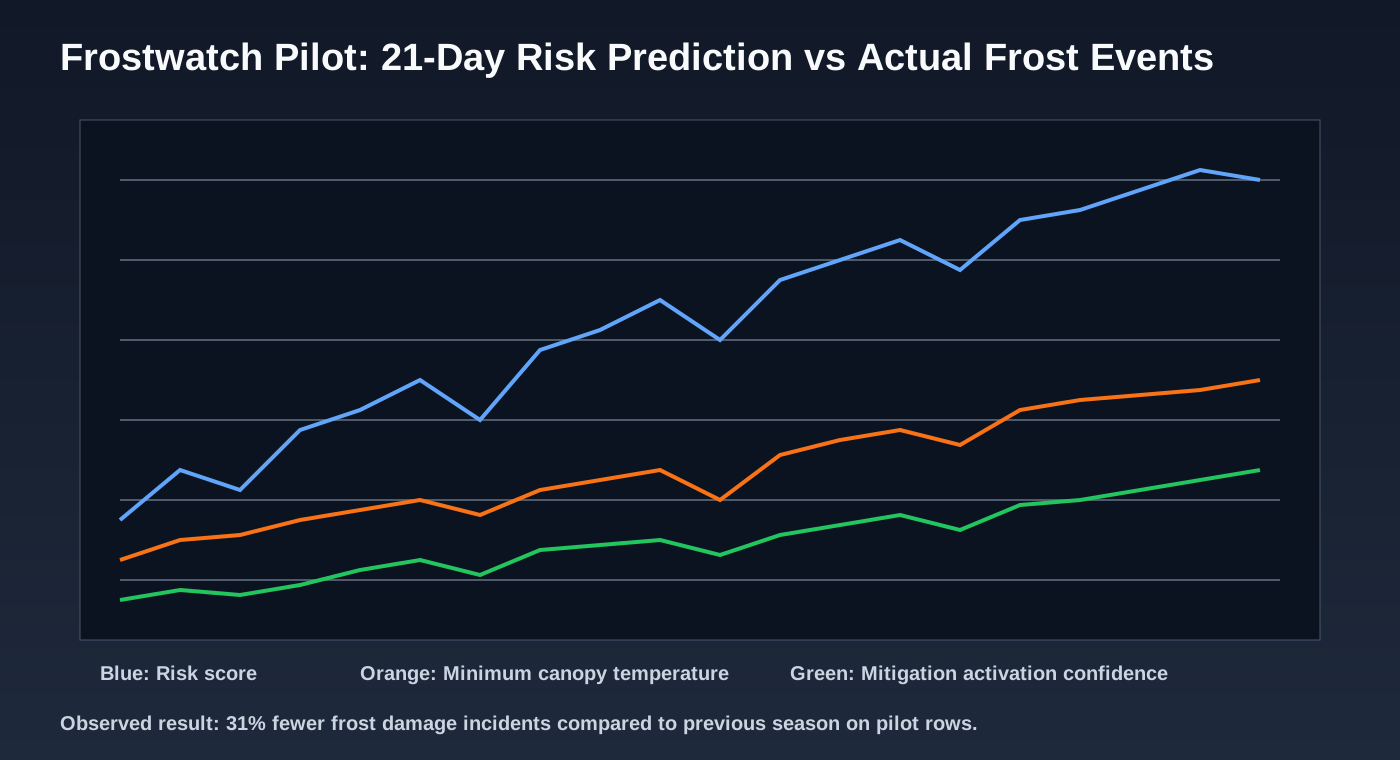
Frostwatch is one of the most practical systems I have built: a distributed frost-risk platform for vineyards where timing matters more than dashboards. If you detect frost risk 20 minutes too late, the damage is already done.
 16
16HOMELAB AND NETWORKING
Detailed comparison of Protobuf and JSON in Rust telemetry pipelines across performance, compatibility, and operability.