 01
01HOMELAB AND NETWORKING
Battery-powered Arduino projects fail in two ways: unstable wake cycles and hidden current draw. I start by listing every component in active and sleep state, then I budget power in milliamp-hours before writing firmware.
 02
02RASPBERRY PI
Cloud-only IoT pipelines are brittle during connectivity outages. I prefer running a local MQTT broker on Raspberry Pi and forwarding data upstream when possible.
 03
03HOMELAB AND NETWORKING
A gateway service sits between unreliable devices and downstream reliable infrastructure. If the gateway collapses under burst load or network instability, the whole system suffers.
 04
04HOMELAB AND NETWORKING
For small IoT backends, Axum provides enough structure without heavy framework overhead. My baseline service exposes ingestion, latest status, and historical query endpoints.
 05
05HOMELAB AND NETWORKING
Many ESP32 projects run perfectly on a developer desk and collapse once deployed in apartments, offices, or industrial spaces with noisy Wi-Fi conditions. The main mistake is treating every disconnect as an exceptional event.
 06
06RASPBERRY PI
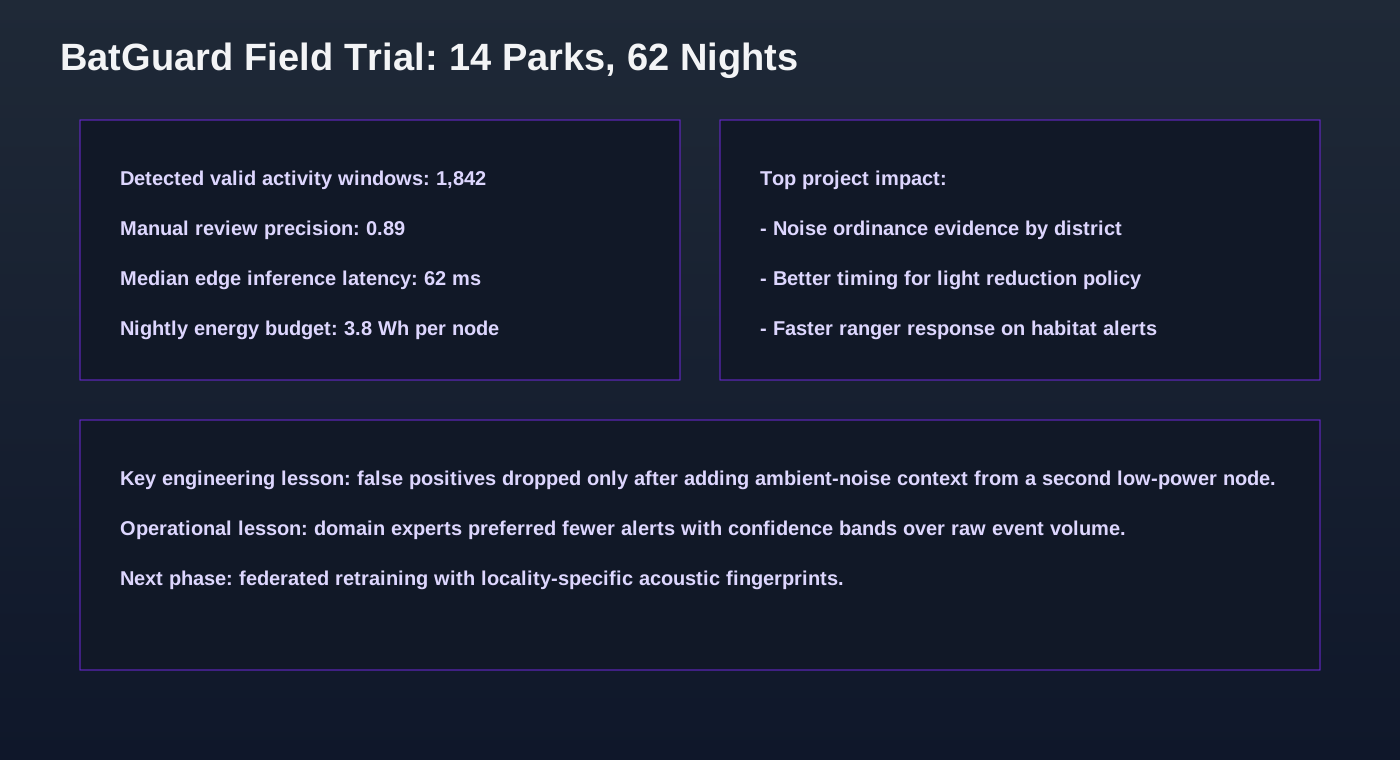
BatGuard is an urban biodiversity platform designed for one hard reality: ecological signals are noisy, and policy action requires credible evidence.
 07
07RASPBERRY PI
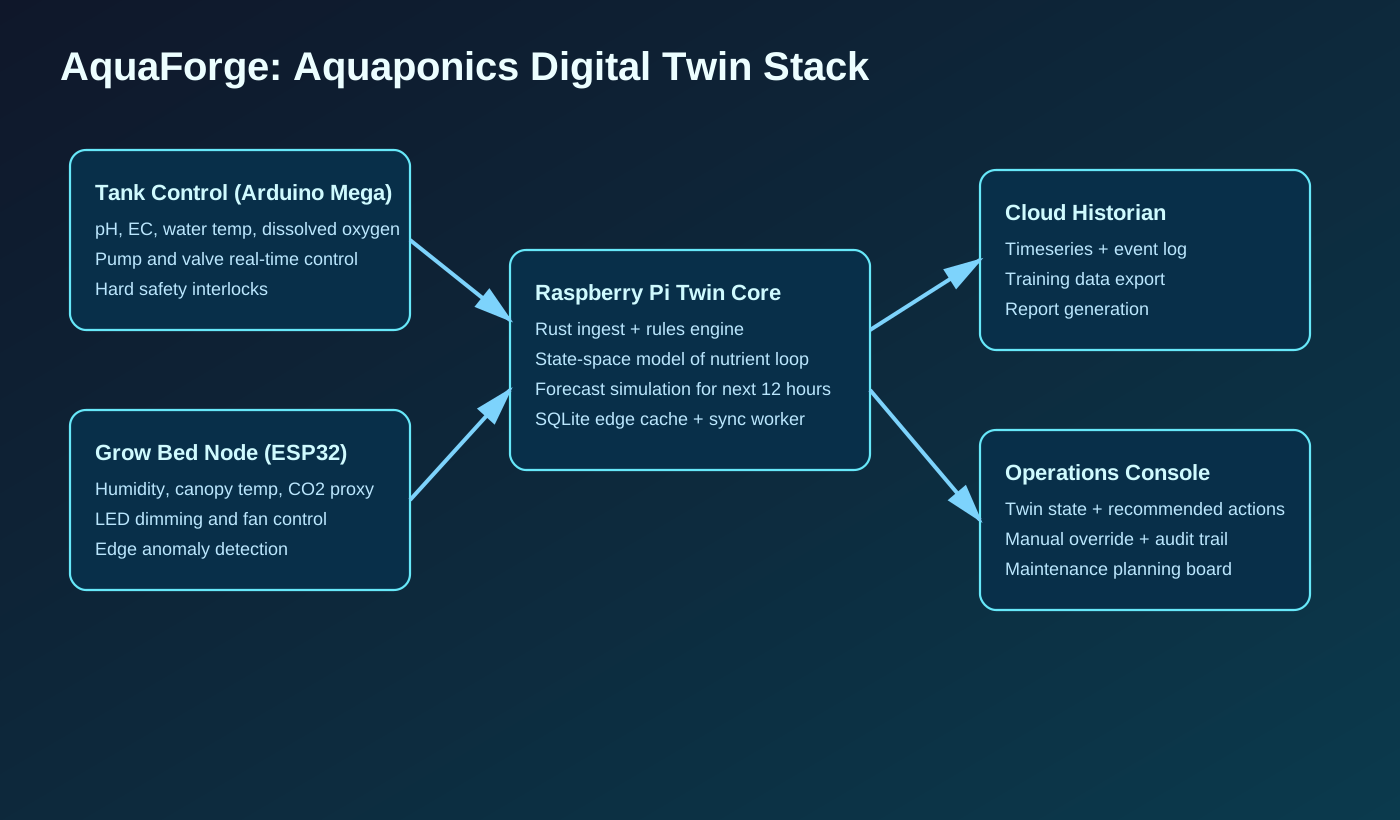
AquaForge started as a home-scale aquaponics controller and evolved into a real digital twin platform. The core idea was to move from reactive control to predictive operation: detect chemistry drift early and simulate intervention outcomes.
 08
08HOMELAB AND NETWORKING
The quickest way to create a messy smart home stack is to publish raw topics without a clear model. Home Assistant integration works best when device identity, telemetry, and commands are explicitly designed.
 09
09HOMELAB AND NETWORKING
LoRa is chosen for range and efficiency, but many nodes still miss battery targets by a large margin. The reason is usually poor budgeting assumptions and missing field validation.
 10
10HOMELAB AND NETWORKING
Outdoor deployments fail more from enclosure mistakes than from firmware defects. A box that looks sealed on day one can trap condensation, stress connectors, and destroy electronics over time.
 11
11DEVOPS
Edge devices frequently run with broad network exposure and weak maintenance. Security hardening has to be practical, repeatable, and automation-friendly.
 12
12HOMELAB AND NETWORKING
MQTT starts simple and becomes chaotic quickly if naming, ownership, and evolution rules are not defined. Topic governance is not bureaucracy. It is how teams avoid accidental coupling and fragile integrations.
13 HOMELAB AND NETWORKING
Telemetry schema changes are inevitable: new sensors, renamed fields, unit corrections, derived metrics. If evolution is unmanaged, dashboards break silently and analytics lose trust.
 14
14HOMELAB AND NETWORKING
OTA updates are high leverage and high risk. A weak update process can brick large parts of a fleet quickly. A strong one reduces support load and security risk while preserving device availability.