 01
01HOMELAB AND NETWORKING
I2C works great on a breadboard demo and then starts failing once real cable lengths and motor noise show up. I now treat I2C reliability as a physical-layer problem first and a software problem second.
 02
02HOMELAB AND NETWORKING
Battery-powered Arduino projects fail in two ways: unstable wake cycles and hidden current draw. I start by listing every component in active and sleep state, then I budget power in milliamp-hours before writing firmware.
03 HOMELAB AND NETWORKING
For greenhouse automation, I wanted a protocol that survives long cable runs and noisy environments. Modbus RTU over RS485 is still one of the best options for this type of deployment.
 04
04HOMELAB AND NETWORKING
Writing to SD cards looks straightforward until you hit power interruptions. I lost enough logs to treat write integrity as a first-class feature. My format is append-only CSV with periodic file sync.
 05
05HOMELAB AND NETWORKING
PID tuning by trial-and-error is slow and inconsistent. I now tune from measured step responses and keep every run logged. First, I characterize the motor and load using open-loop PWM sweeps.
 06
06HOMELAB AND NETWORKING
As firmware evolves, stored settings formats change. If EEPROM layout is not versioned, upgrades can silently load garbage and produce hard-to-diagnose behavior.
07 HOMELAB AND NETWORKING
Small Arduino prototypes often fail when moved into real environments. The cause is rarely one major bug. It is usually the accumulation of power noise, slow memory leaks, missing timeouts, and weak recovery behavior.
08 HOMELAB AND NETWORKING
A pump controller is not a toy project once water, pressure, and unattended operation are involved. The goal is not just controlling a relay.
09 HOMELAB AND NETWORKING
Many embedded dashboards look stable only because noise is hidden by aggressive averaging. That is not the same as accurate measurement.
 10
10RASPBERRY PI
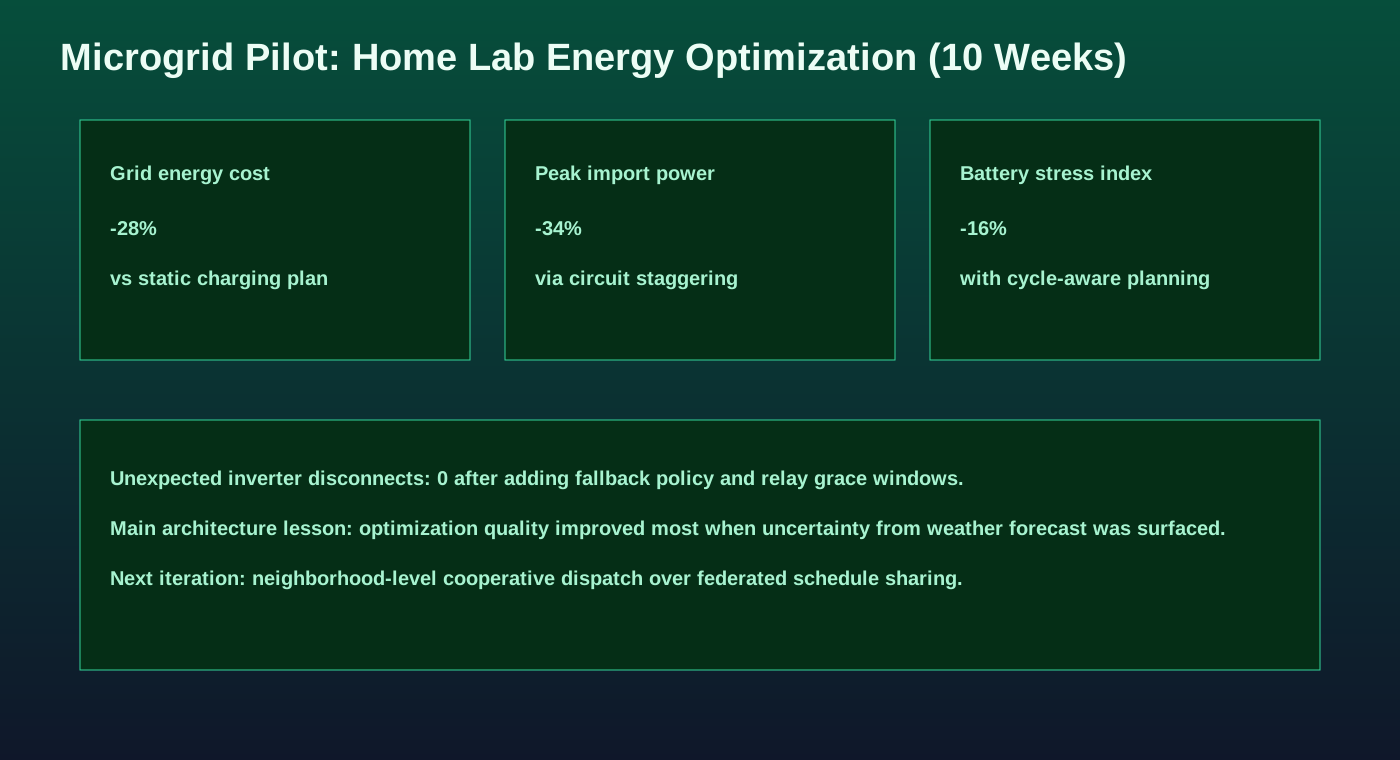
This project started with a practical question: can a small home lab run like a disciplined microgrid instead of a set of independent devices fighting each other?
 11
11RASPBERRY PI
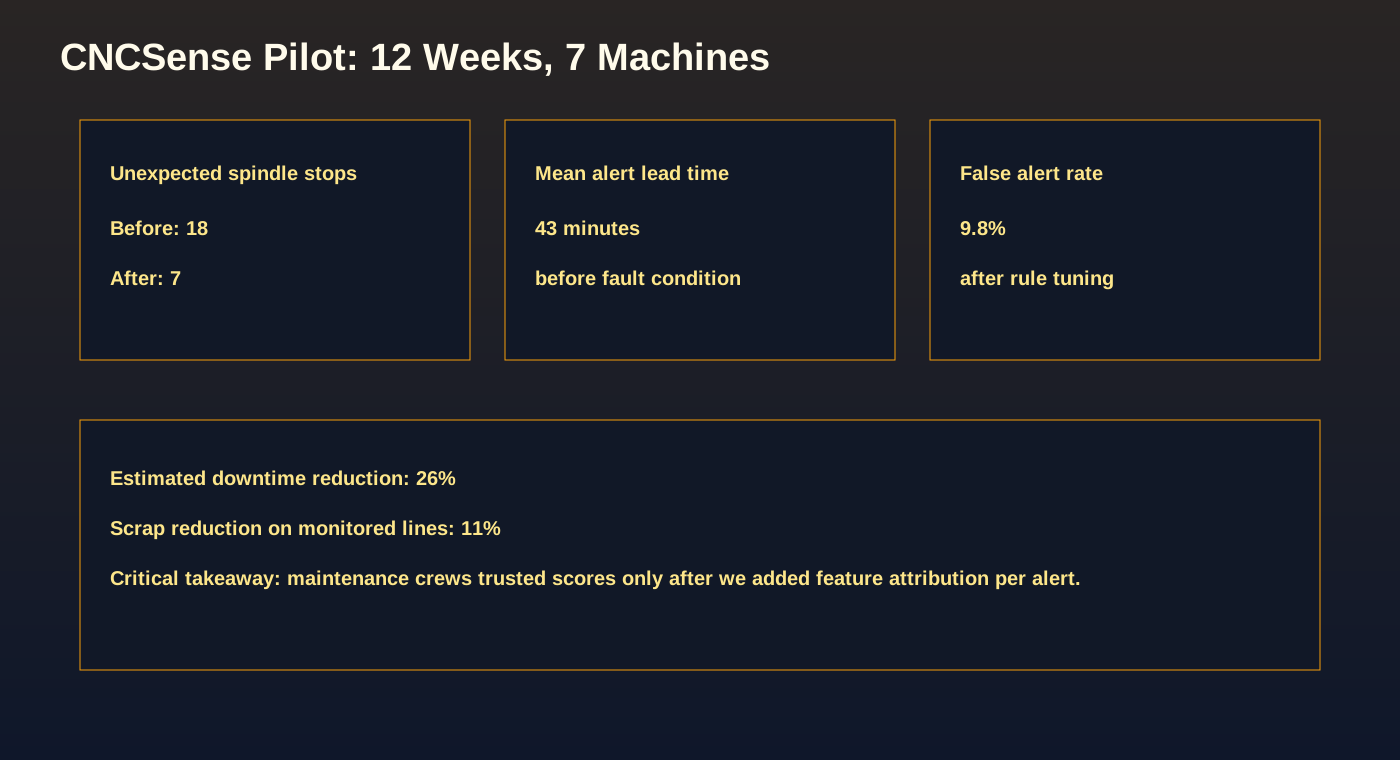
CNCSense was built to solve a common manufacturing pain: legacy machines fail without enough warning, and maintenance teams are forced into reactive firefighting.
 12
12RASPBERRY PI
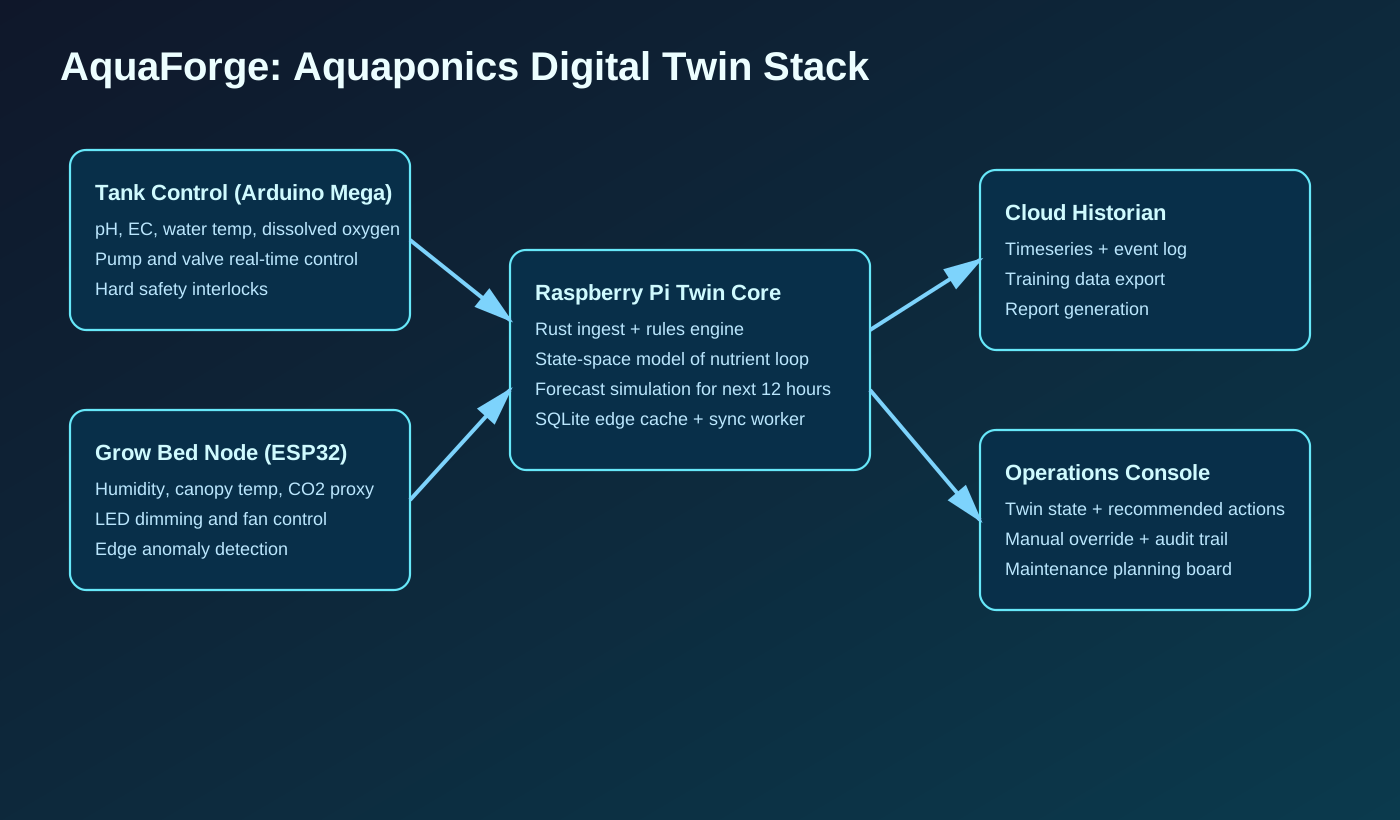
AquaForge started as a home-scale aquaponics controller and evolved into a real digital twin platform. The core idea was to move from reactive control to predictive operation: detect chemistry drift early and simulate intervention outcomes.
 13
13RASPBERRY PI
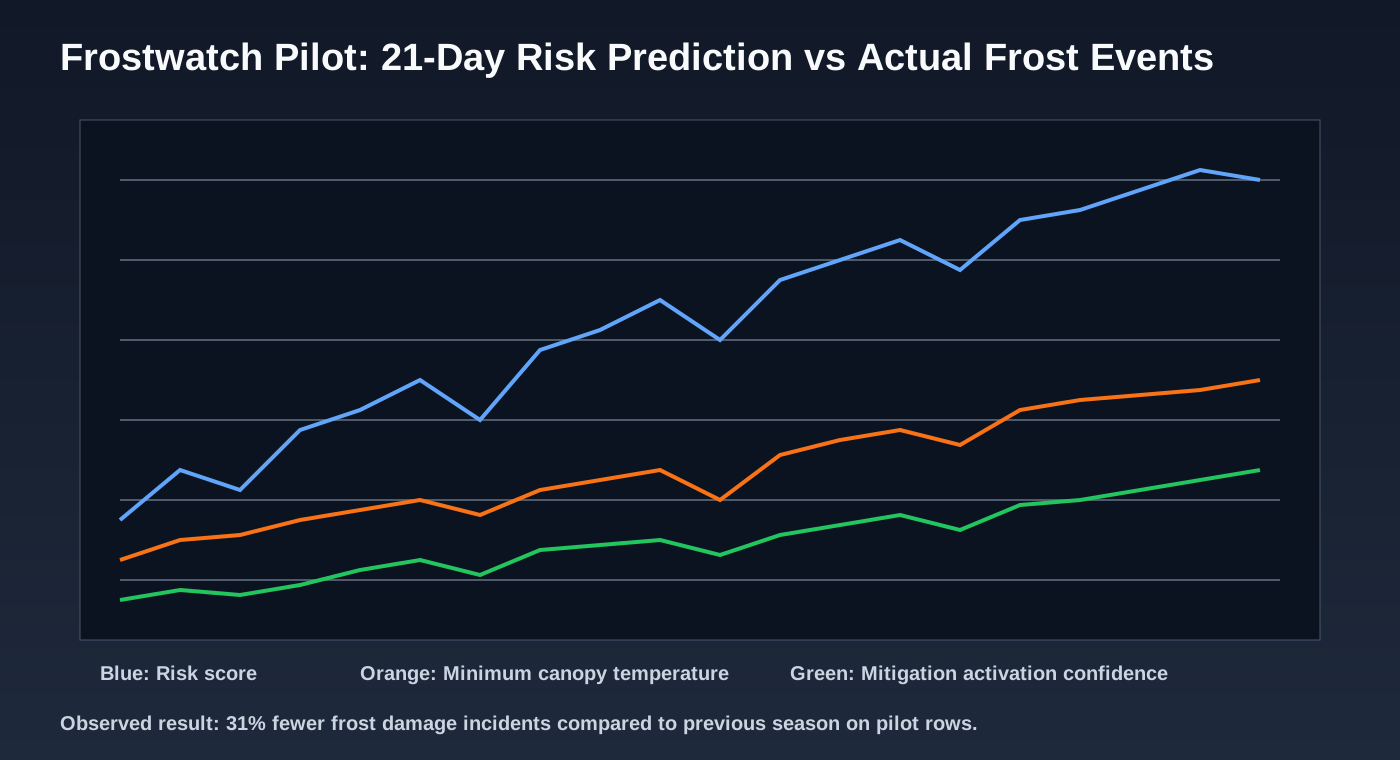
Frostwatch is one of the most practical systems I have built: a distributed frost-risk platform for vineyards where timing matters more than dashboards. If you detect frost risk 20 minutes too late, the damage is already done.